
Ask most people what they want from a new kitchen and you will hear a familiar list: more storage, better worktop space, a bigger island. These are reasonable starting points. But they are answers to the wrong question.
The right question is not what you want to add – it is how you actually live. What time do you get up? Do you cook from scratch or heat things up? Do people gather in the kitchen when you are entertaining, or do you prefer to keep guests in another room? Is there a dog? Grandchildren visiting at weekends? A partner who cannot reach the top shelf?
The answers to these questions are what a genuinely well-designed kitchen is built around. Everything else – layout, storage types, appliance placement, island dimensions – follows from them.
Why Most Kitchen Designs Miss the Point
The standard approach to kitchen design, whether from a high street retailer or a national brand, tends to begin with the physical space. Measurements are taken, a layout is proposed, finishes are selected. The result is a kitchen that fits the room – but may not fit the life being lived in it.
A kitchen designed this way will function. But there is a difference between a kitchen that works and one that genuinely makes daily life easier, more enjoyable, and more sociable. The latter requires a different kind of conversation at the design stage.
The Questions That Actually Shape Great Kitchen Design
At Holme Tree, every project begins with an extended conversation about the way the client lives. Some of the most revealing questions are the simplest:
- How do you use your kitchen in the morning? Is it rushed, or slow?
- Do you cook together as a couple, or predominantly alone?
- Where do children or grandchildren tend to gravitate when they visit?
- What do you find frustrating about your current kitchen?
- Do you want to be able to see the garden or a particular view whilst cooking?
- How important is it to be able to talk to people in the room whilst you work at the hob?
- Do you entertain formally, informally, or a mixture of both?
These conversations unlock design decisions that no amount of measuring will reveal. The position of the hob relative to the seating area, the height of the island, the location of the coffee station, the depth of the larder, whether a breakfast pantry makes more sense than overhead wall units – all of these are driven by lifestyle, not by the dimensions of the room.
Common Lifestyle-Led Design Decisions
The following are some of the most common examples of how a lifestyle conversation changes the design outcome:
The social island
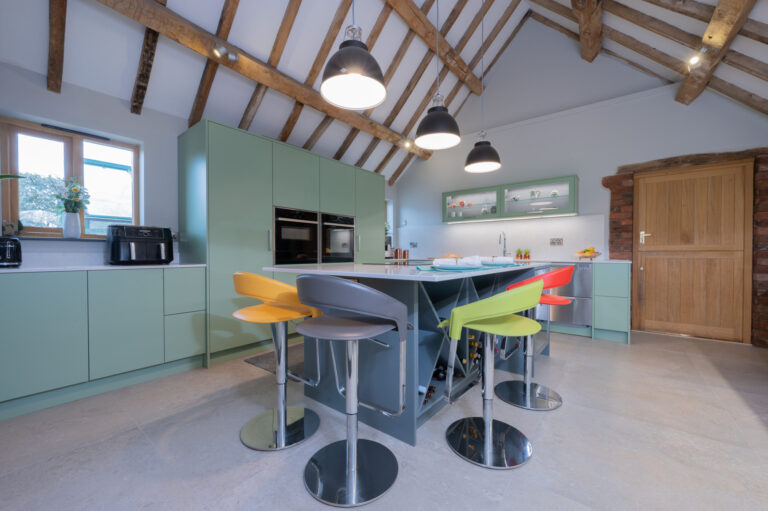
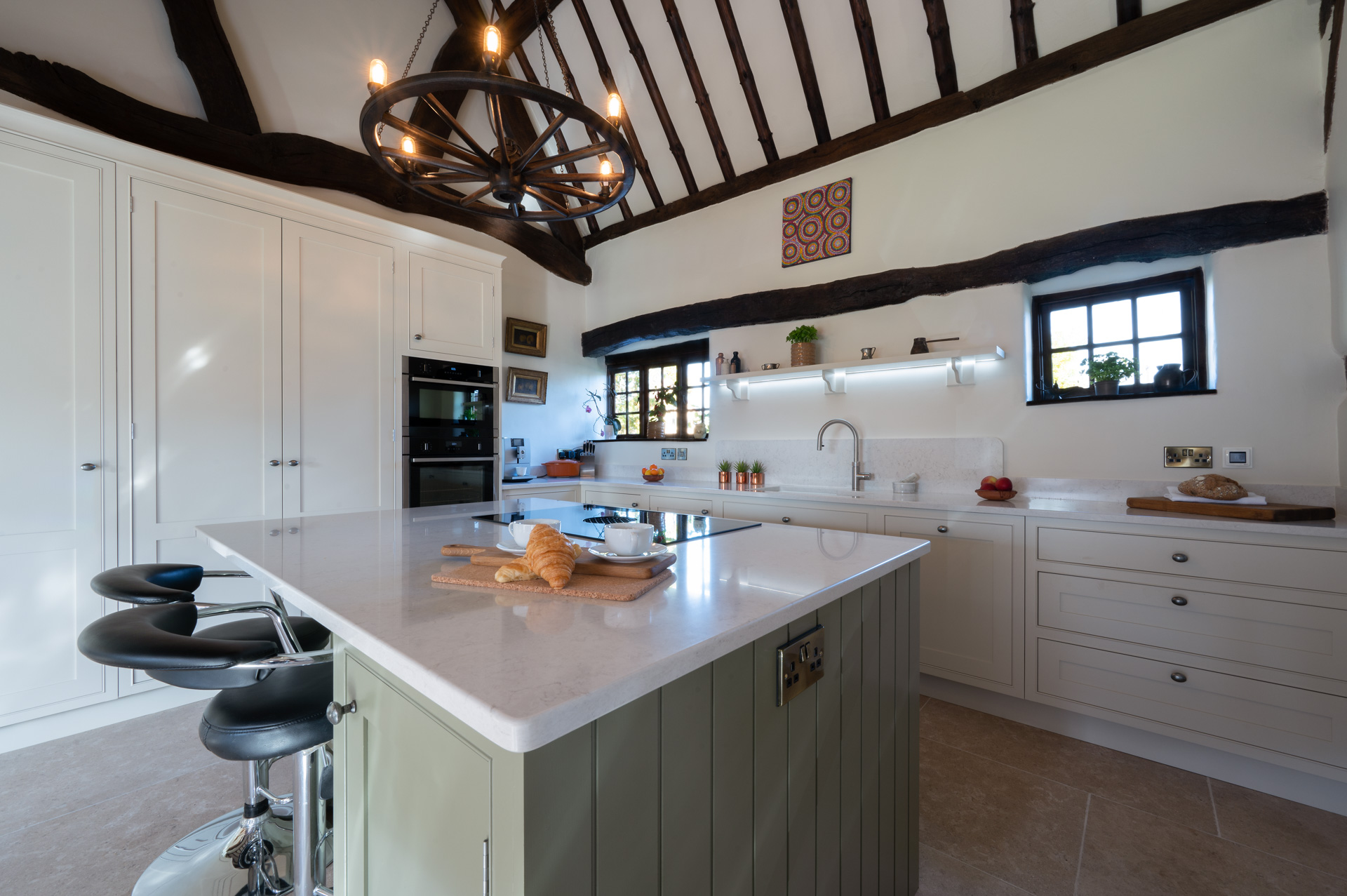
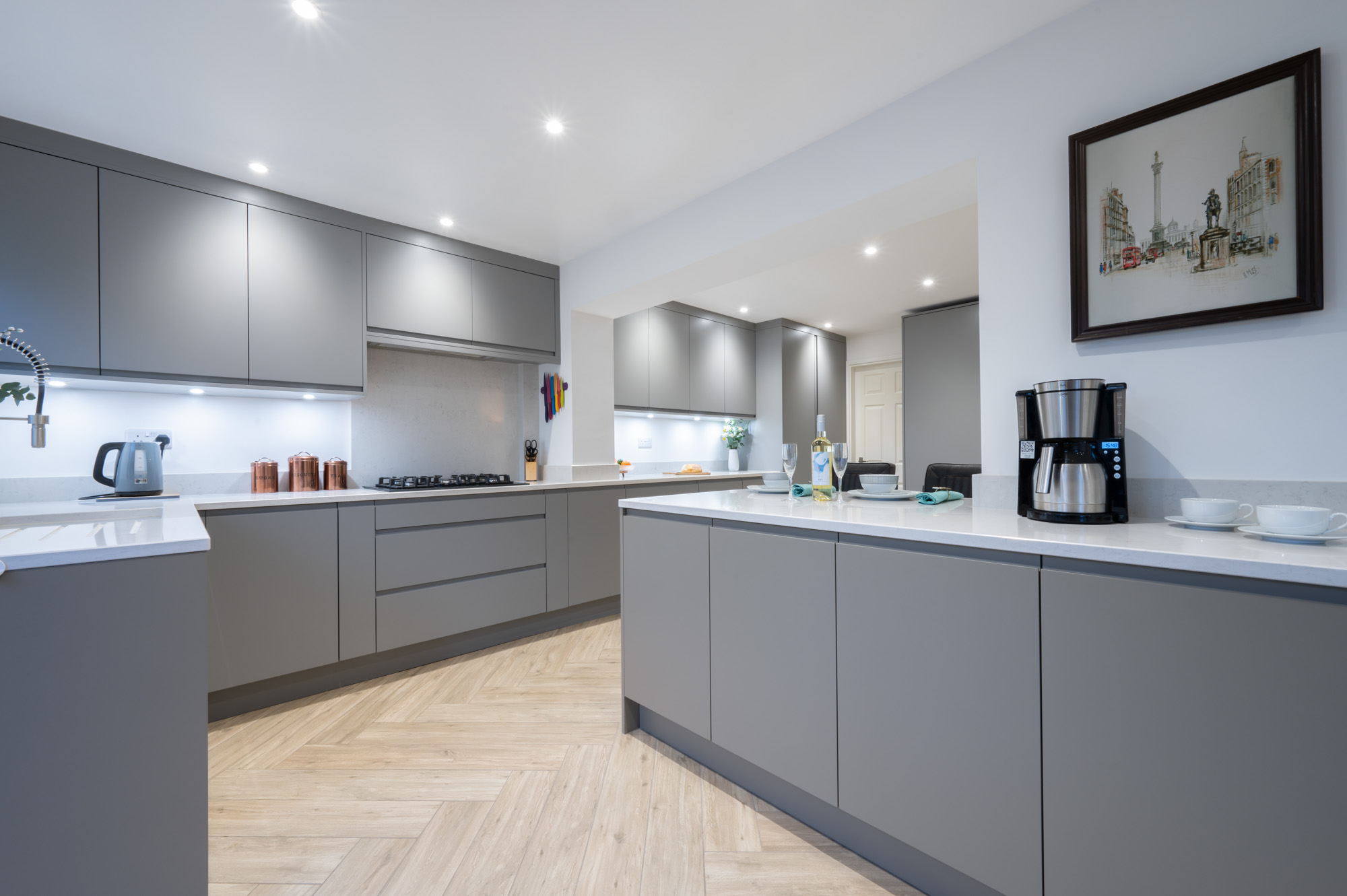
An island designed for a keen cook who works alone is a different piece of furniture from one designed for a household where the kitchen is the social hub. The latter needs comfortable seating, good sightlines to the cooking area, and enough surface space for people to gather without being underfoot. These dimensions are arrived at through conversation, not convention.
The coffee station
For many clients, the first fifteen minutes of the morning are built around coffee. A dedicated station – with the machine, the cups, the beans, the grinder – placed near a window with a view can turn a functional act into a genuinely pleasant start to the day. It costs nothing in terms of design effort and makes a meaningful difference to daily life.
Eye-level appliances
Bending down to a low oven several times a day is a minor irritation in your forties and a genuine problem in your sixties. Designing appliances at the correct height for the people using them is a small adjustment with a long-term impact – particularly for clients investing in a forever home.
The larder and pantry
Clients who cook regularly often find that the volume of storage they need cannot be met by wall units and base cabinets alone. A well-designed larder or breakfast pantry resolves this in a way that also looks beautiful – and keeps the main kitchen surfaces clear.
Boot room flow and utility connections
For rural properties or homes with dogs, the relationship between the kitchen and the boot room matters enormously. Getting the flow right – so that muddy boots and wet coats do not have to pass through the kitchen – is a design decision that affects everyday life more than any finish or door style.
Designing for the Long Term
One of the most important aspects of lifestyle-led design is thinking ahead. A kitchen that suits your life perfectly today should also accommodate how your life might change.
Clients who are recently retired often think about cooking more seriously than they did during working years. Those with young children may want to consider how the space will work when those children are teenagers and then adults. Anyone investing in a forever home should think about how the kitchen will work in twenty years, not just now.
This is part of the reason that quality of construction matters as much as quality of design. A kitchen that has been genuinely built to last gives you the option to change finishes, update appliances, or refresh elements over time – without replacing the whole thing.
Starting the Conversation
If you are considering a new kitchen and want to explore what a lifestyle-led design process looks like in practice, the best starting point is a visit to Holme Tree’s showroom in Ashby de la Zouch. You can also browse completed projects in the project gallery to see the range of solutions that have been created for real clients in real homes, or book a design appointment to begin the conversation about your own space.
There is no obligation and no pressure. The first appointment is simply a conversation – about your home, your life, and what your kitchen could be.
Frequently Asked Questions
What does lifestyle-led kitchen design mean in practice?
It means that the design process begins with a detailed conversation about how you actually live – your routines, habits, social patterns, and how you use your current kitchen – rather than starting from a catalogue layout. The physical design follows from this conversation rather than being applied to it.
How do I know what I want from a new kitchen if I have never had a bespoke one?
You do not need to arrive with a brief. The designer’s job is to draw out what matters to you through conversation and to translate that into a design you may not have been able to imagine yourself. Many clients find the process reveals preferences they did not know they had.
Is a lifestyle-led design approach more expensive?
Not inherently. It changes what you prioritise and where you invest – which often means spending more on the elements that genuinely improve daily life and less on things that are aesthetic but lower impact. The result is typically a kitchen that works harder for the money spent.
How do you design a kitchen for a couple with different needs?
By understanding both sets of needs separately and finding design solutions that serve both – whether that means separate zones, thoughtful appliance placement, or layouts that allow two people to work comfortably without getting in each other’s way. It is one of the most common and most enjoyable design challenges.
Can you design around accessibility needs?
Yes. Holme Tree designs entirely to the individual, which includes clients who need to think about appliance height, worktop depth, aisle width, or ease of movement within the space. These requirements are built into the design from the outset, not retrofitted.